
Sneak Peak into Elizabeth White – Sacrificial Mother
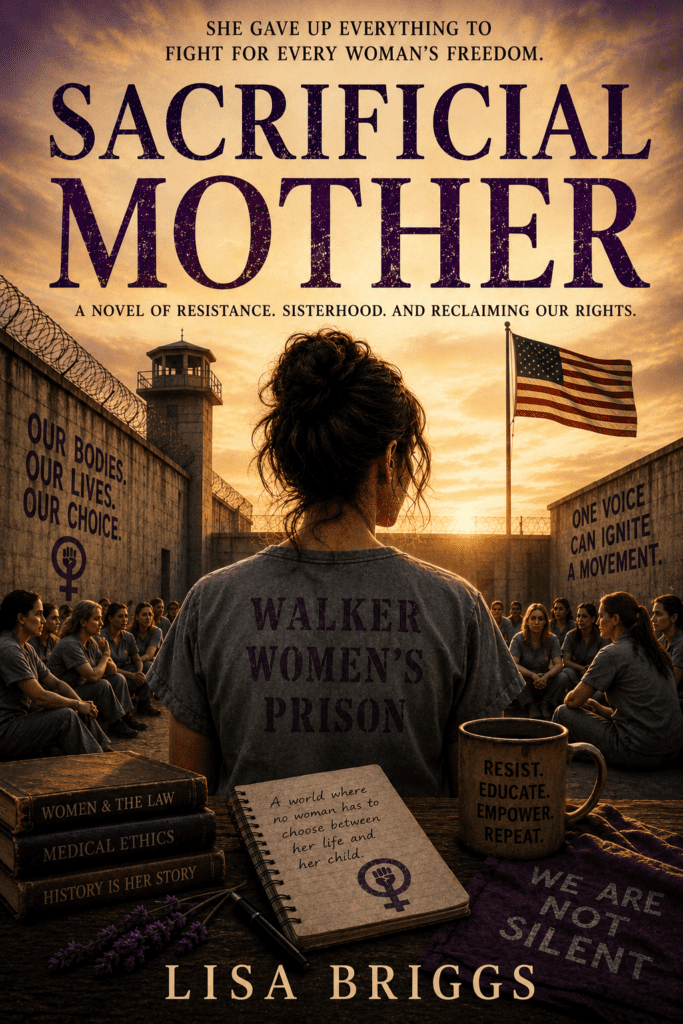
The minute Elizabeth set foot in Walker Women’s Prison in Mobile, Alabama, she became a hero among the other inmates. Many were medical professionals who had assisted with necessary abortions or intervened in situations where saving the baby would have cost the mother her life. One female doctor was serving a 99-year sentence. Women’s rights and bodily autonomy were at the center of life inside Walker, dominating conversations on most days.
Dr. Brothers, who had devoted her life to Doctors Without Borders, was sadly familiar with countries taking century-long steps backward when it came to women’s rights. She had witnessed Iranian women go from being educated doctors, lawyers, and respected professionals to prisoners of their own homes, denied education and opportunity. It was a never-ending battle—pushing and pushing to gain and regain freedoms that should be a given for all humankind.
At Walker, most women were housed in large dormitory-style rooms filled with fifty or more bunk beds lined up row after row. Occasionally, a skirmish would break out, but for the most part, the women became one large family, with smaller families within. Dr. Brothers invited Elizabeth into her circle and introduced her to Patty, Kim, Trish, Damia, and Miss Emma. Elizabeth would bunk above Dr. Brothers.
During her first week, Elizabeth learned the rules of engagement—where to eat, when to go to the yard, and how to navigate the schedules for counseling, church, education, and exercise. She was assigned to clean the shower room, a job that involved mopping floors, scrubbing walls, and restocking soap and shampoo every day. It was a lot to take in, but it gave her mind something to focus on besides the reality that this would be her life for the next ten years.
There were definitely some angry, defiant women in Walker. Some loved a good fight, while others were simply mouthy as hell. A few just wanted to see if they could get a rise out of you. But unlike most prisons, Walker housed an unusually educated population. Doctors, nurses, midwives, pharmacists, counselors, professors, journalists, attorneys, and activists filled the bunks. Some had performed abortions. Others had transported women across state lines, provided medication, donated to underground networks, published information deemed illegal, or protested outside government buildings. A handful were there simply for refusing to testify against friends and colleagues.
On Wednesday, Elizabeth attended her first group counseling session, which turned out to be more of a symposium on the current state of the American political system. Doctors, lawyers, and other professionals shared well-thought-out opinions from various points of view. Elizabeth was fascinated as she sat quietly listening for over two hours.
The discussion not only gave her hope, but it also sparked an idea and gave her the courage to dream of something bigger than herself, bigger than Walker Women’s Prison, and even bigger than America. It was time for women around the world to take back their God-given place.
When Elizabeth’s head hit the pillow that night, she didn’t sleep at all. Ideas swirled through her mind. Pros and cons. Where would the funding come from? How would they communicate? Who would be their messenger? Who should be involved? There was so much work to be done.
Ironically, the government had inadvertently helped them immensely by placing all of these well-educated, like-minded individuals in one place with all sorts of time on their hands. It was as if the American politicians were just waiting for them to do something.
And boy, were they ready.